

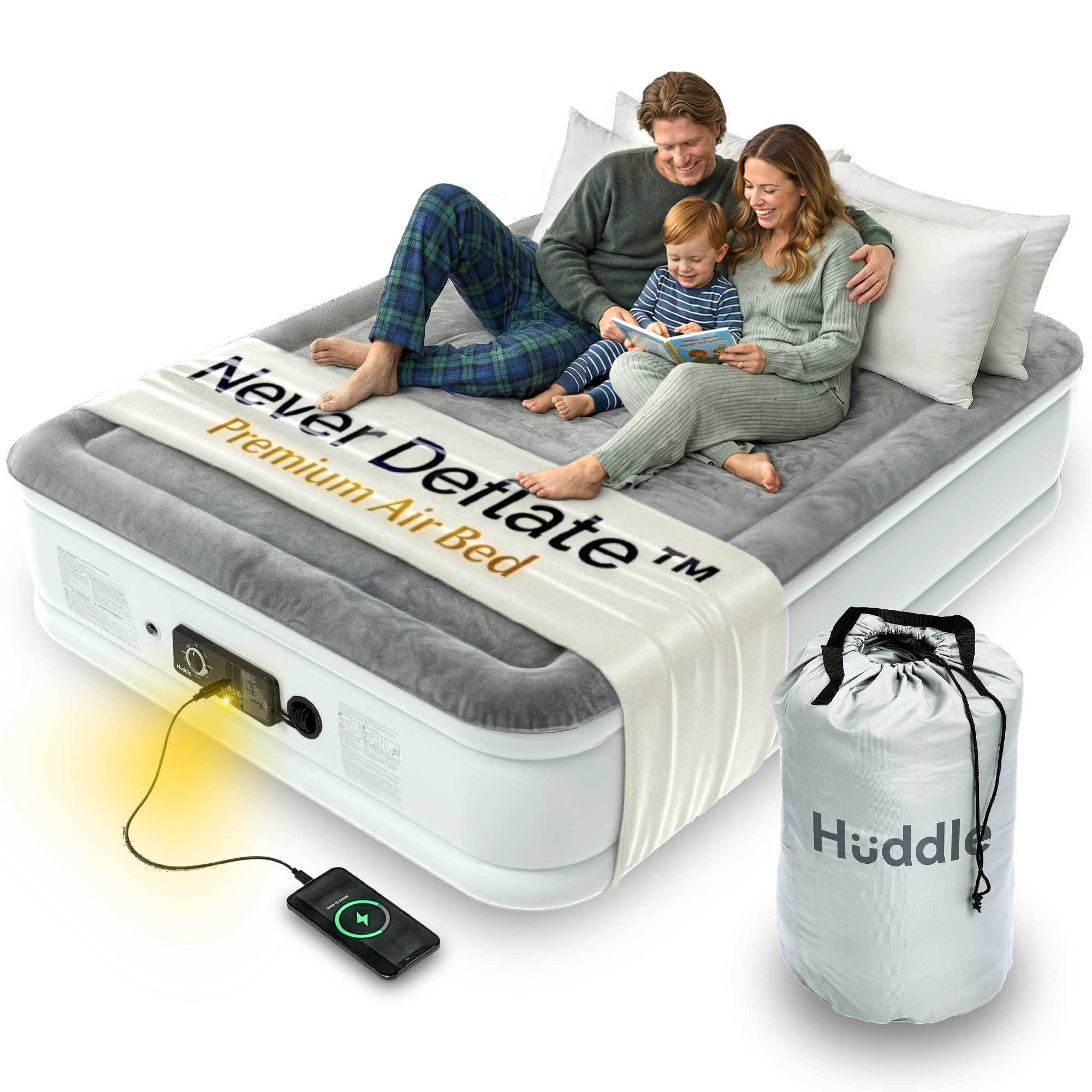
Airbeds have come a long way. What used to be seen as a temporary solution for guests or camping has evolved into something far more advanced. With modern features like built-in pumps, improved support systems, and materials designed for comfort, more people are starting to ask the question: can you actually rely on sleeping on an airbed every night?
Whether you're short on space, in temporary accommodation, or simply exploring alternatives to traditional mattresses, it’s a fair question. The answer isn’t a simple yes or no. It depends on the quality of the airbed, how it’s used, and what you expect from your sleep setup.
In this guide, we’ll break down the real pros and cons of sleeping on an airbed every night, helping you decide if it’s the right long-term solution for you.

Why People Consider Sleeping on an Airbed Every Night
There are plenty of reasons why people turn to airbeds as a full-time option:
Limited space in flats, studios, or shared homes
Temporary living situations or relocations
Budget-friendly alternative to traditional mattresses
Guest setups that become more permanent
Flexibility for travel or multi-use rooms
With rising costs and more flexible lifestyles, airbeds are no longer just occasional-use products. For some, they’re becoming a practical everyday solution.
The Benefits of Sleeping on an Airbed Every Night
1. Adjustable Comfort to Suit You
One of the biggest advantages of sleeping on an airbed every night is the ability to adjust firmness.
Unlike traditional mattresses that come with a fixed feel, an airbed lets you customise your comfort level. Prefer something softer? Release a bit of air. Need more support? Inflate it further.
This flexibility can be especially useful for:
Back sleepers needing firmer support
Side sleepers wanting pressure relief
Couples with different preferences
With the right setup, it’s easier to fine-tune your sleep position over time.
2. Space-Saving and Practical
Airbeds are ideal if space is tight.
They can be deflated and stored away when not in use, making them perfect for:
Studio apartments
Multi-purpose rooms
Guest spaces that double as offices
Even when used every night, the ability to pack it down offers flexibility that traditional beds simply can’t match.
3. Easy Setup and Portability
Modern airbeds inflate quickly and require minimal effort to set up.
This makes them a strong option for:
People who move frequently
Temporary housing situations
Students or renters
Instead of dealing with bulky frames and heavy mattresses, you can have a comfortable sleep setup ready in minutes.
4. Cost-Effective Alternative
Traditional mattresses can be expensive, especially when paired with bed frames and accessories.
Sleeping on an airbed every night can be a more affordable option upfront, particularly for:
Short-term living situations
Budget-conscious buyers
Secondary sleeping arrangements
That said, cost should always be balanced with long-term comfort and durability.
5. Modern Features Improve Sleep Quality
Today’s airbeds are not what they used to be.
Higher-quality models now include:
Built-in pumps for quick inflation
Reinforced internal structures for better support
Elevated designs for easier access
Quiet pressure-maintaining systems to prevent sagging
These features make sleeping on an airbed every night far more viable than it was in the past.

The Drawbacks of Sleeping on an Airbed Every Night
1. Long-Term Support Can Be Inconsistent
Even with improvements, airbeds don’t always match the structural support of a high-quality mattress.
Over time, this can lead to:
Reduced spinal alignment
Pressure points
General discomfort if not properly adjusted
This is especially noticeable if the airbed loses firmness during the night.
2. Risk of Air Loss
One of the most common concerns with sleeping on an airbed every night is deflation.
Standard airbeds can:
Lose air gradually overnight
Require regular top-ups
Feel uneven by morning
This can disrupt sleep and reduce overall comfort, particularly with lower-quality models.
3. Durability Over Time
Airbeds are typically made from flexible materials, which means they are more prone to wear than traditional mattresses.
Potential issues include:
Punctures or leaks
Seams weakening over time
Reduced performance with daily use
For occasional use, this isn’t a major issue. For nightly use, durability becomes much more important.
4. Temperature Sensitivity
Airbeds can react to changes in temperature.
Cooler air can cause the internal air to contract, which may:
Reduce firmness overnight
Affect overall comfort
Require adjustment depending on the environment
This is something many users don’t expect when first using an airbed long-term.
5. Not All Airbeds Are Designed for Daily Use
This is a key point.
Many airbeds on the market are built for:
Occasional guest use
Camping trips
Short-term setups
Using these models every night can quickly highlight their limitations.
How to Make Sleeping on an Airbed Every Night More Comfortable
If you’re considering making the switch, there are ways to improve your experience.
Choose a High-Quality Airbed
Not all airbeds are created equal.
Look for features like:
Reinforced internal support structures
Double-height design for better comfort
Durable construction to withstand regular use
Built-in pump systems
A premium airbed will make a noticeable difference if you plan to use it every night.
Maintain Proper Inflation
Getting the firmness right is key.
Too soft, and you’ll sink and lose support. Too firm, and it can feel uncomfortable.
Check the pressure regularly and adjust as needed to maintain consistent comfort.
Add Bedding Layers
A simple upgrade that makes a big difference.
Consider adding:
A mattress topper
Thick duvets or blankets
Fitted sheets designed for deeper beds
These layers improve comfort and help regulate temperature.
Place It on a Suitable Surface
Where you position your airbed matters.
For best results:
Use a flat, even surface
Avoid sharp objects or rough flooring
Consider placing a rug or mat underneath
This protects the airbed and improves overall stability.
Is Sleeping on an Airbed Every Night a Good Idea?
The honest answer is: it can be, but it depends on the airbed.
For short to medium-term use, a high-quality airbed can be a perfectly viable solution. It offers flexibility, comfort, and convenience that suits modern lifestyles.
However, for long-term, permanent use, traditional mattresses still have the edge when it comes to consistent support and durability.

Where Modern Airbeds Are Changing the Game
This is where newer innovations come into play.
Some premium airbeds now include systems designed to maintain air pressure throughout the night. Instead of waking up to a softer surface, the bed actively keeps its firmness consistent.
This addresses one of the biggest drawbacks of sleeping on an airbed every night: overnight deflation.
Combined with improved materials and support structures, these advancements are narrowing the gap between airbeds and traditional mattresses.
Final Thoughts
Sleeping on an airbed every night is no longer as impractical as it once seemed.
With the right setup, it can be:
Comfortable
Flexible
Cost-effective
But it’s not a one-size-fits-all solution.
If you’re considering it, focus on quality, support, and features that are designed for regular use. The difference between a basic airbed and a well-designed one is significant, especially when used night after night.
For occasional use, almost any airbed will do. For everyday sleep, choosing the right one makes all the difference.
Share:
How to Make Your Airbed Feel Like a Real Mattress: Tips and Tricks
How Long Should a Good Airbed Last? Tips for Longevity