

If you’ve ever woken up on a sagging airbed or had to re-inflate it halfway through the night, you’ll know how frustrating poor durability can be. It raises a simple but important question: how long should a good airbed actually last?
The answer depends on several factors, including build quality, usage habits, and how well it’s looked after. A well-made airbed with proper care can last several years, while a cheaper or poorly maintained one might only last a handful of uses.
In this guide, we’ll break down everything you need to know about airbed lifespan, from what impacts durability to practical tips that help you get the most out of your investment.

What Is the Average Airbed Lifespan?
The airbed lifespan varies significantly depending on quality and usage:
Budget airbeds: 1–6 months with regular use
Mid-range airbeds: 1–3 years
Premium airbeds: 3–5+ years with proper care
For occasional use, such as hosting guests or camping trips, even a mid-range airbed can last years. But if you’re using it regularly or nightly, durability becomes much more important.
Premium airbeds, like those designed with reinforced seams and advanced air retention systems, are built to handle repeated use without losing comfort or structure.
Key Factors That Affect Airbed Lifespan
Understanding what influences your airbed lifespan helps you avoid common issues and make better buying decisions.
1. Material and Construction
The biggest factor is build quality. Airbeds made with thicker PVC, reinforced seams, and internal support structures tend to last much longer.
Look for:
Multi-layer construction
Reinforced or welded seams
Internal air coils or beam structures for support
These features reduce stress on the material and prevent early wear.
2. Frequency of Use
How often you use your airbed plays a major role in its longevity.
Occasional use: Minimal wear, longer lifespan
Regular guest use: Moderate wear
Everyday sleeping: Higher wear, requires premium build
If you’re relying on an airbed every night, investing in a higher-quality model is essential to maintain a strong airbed lifespan.
3. Weight Load and Distribution
Every airbed has a weight capacity. Regularly exceeding it puts strain on seams and internal structures, shortening its lifespan.
Even within limits, uneven weight distribution such as sitting on the edge repeatedly can weaken specific areas over time.
4. Surface and Environment
Where you place your airbed matters more than most people realise.
Rough or uneven surfaces can:
Cause micro-abrasions
Increase risk of punctures
Wear down the base material faster
Temperature also plays a role. Cold environments can cause air to contract, making the bed feel softer and increasing stress on the material.
5. Inflation System Quality
One of the biggest complaints about airbeds is deflation. Traditional models often lose air overnight, which not only affects comfort but also shortens the airbed lifespan.
Airbeds with advanced pump systems that maintain consistent pressure reduce strain on seams and improve durability significantly.
Signs Your Airbed Is Reaching the End of Its Lifespan
Even with proper care, every airbed will eventually wear out. Here are the most common signs:
Frequent loss of air despite no visible punctures
Visible stretching or sagging
Weak seams or small splits forming
Reduced comfort and support
If you’re constantly topping it up or waking up uncomfortable, your airbed lifespan may be coming to an end.

How to Extend Your Airbed Lifespan
The good news is that with a few simple habits, you can significantly extend your airbed lifespan.
1. Use a Protective Layer
Adding a mattress topper, blanket, or fitted sheet reduces direct contact with the surface. This helps prevent wear, moisture build-up, and small abrasions.
2. Inflate It Correctly
Over-inflation is one of the quickest ways to damage an airbed.
Stick to recommended firmness levels:
Too soft: increased strain when moving
Too firm: excessive pressure on seams
A properly inflated bed maintains its structure and extends overall durability.
3. Keep It Clean and Dry
Moisture and dirt can weaken materials over time.
After use:
Wipe down the surface
Let it fully dry before storing
Avoid storing in damp environments
This simple step goes a long way in preserving your airbed lifespan.
4. Store It Properly
When not in use, storage is critical.
Deflate fully
Fold loosely rather than tightly creasing
Store in a cool, dry place
Avoid leaving it compressed for long periods, as this can weaken internal structures.
5. Avoid Sharp Objects and Rough Surfaces
This might sound obvious, but it’s one of the most common causes of damage.
Before setting up:
Clear the area of debris
Use a groundsheet or rug if needed
Keep pets’ claws away from the surface
6. Don’t Sit on the Edges Repeatedly
Airbeds aren’t designed like traditional mattresses. Sitting on the edge repeatedly puts concentrated pressure on seams and can lead to early failure.
7. Top Up Air When Needed
A slight loss of firmness can happen naturally due to temperature changes or material stretch. Topping up air occasionally helps maintain structure and reduces stress on the bed.
Why Modern Airbeds Last Longer Than Before
Airbed technology has come a long way. Older models were often prone to leaks, discomfort, and rapid wear. Today’s designs focus heavily on durability and user experience.
Modern improvements include:
Reinforced internal structures for full-body support
More durable outer materials
Advanced pump systems that maintain air pressure
Elevated designs that reduce strain and improve comfort
These innovations play a major role in extending the average airbed lifespan, especially for people using them more frequently.
Choosing an Airbed Built to Last
If longevity matters, it’s worth choosing an airbed designed with durability in mind.
Look for features like:
Dual pump systems for consistent air pressure
Elevated designs to reduce ground impact
Strong internal support structures
Reliable warranties for peace of mind
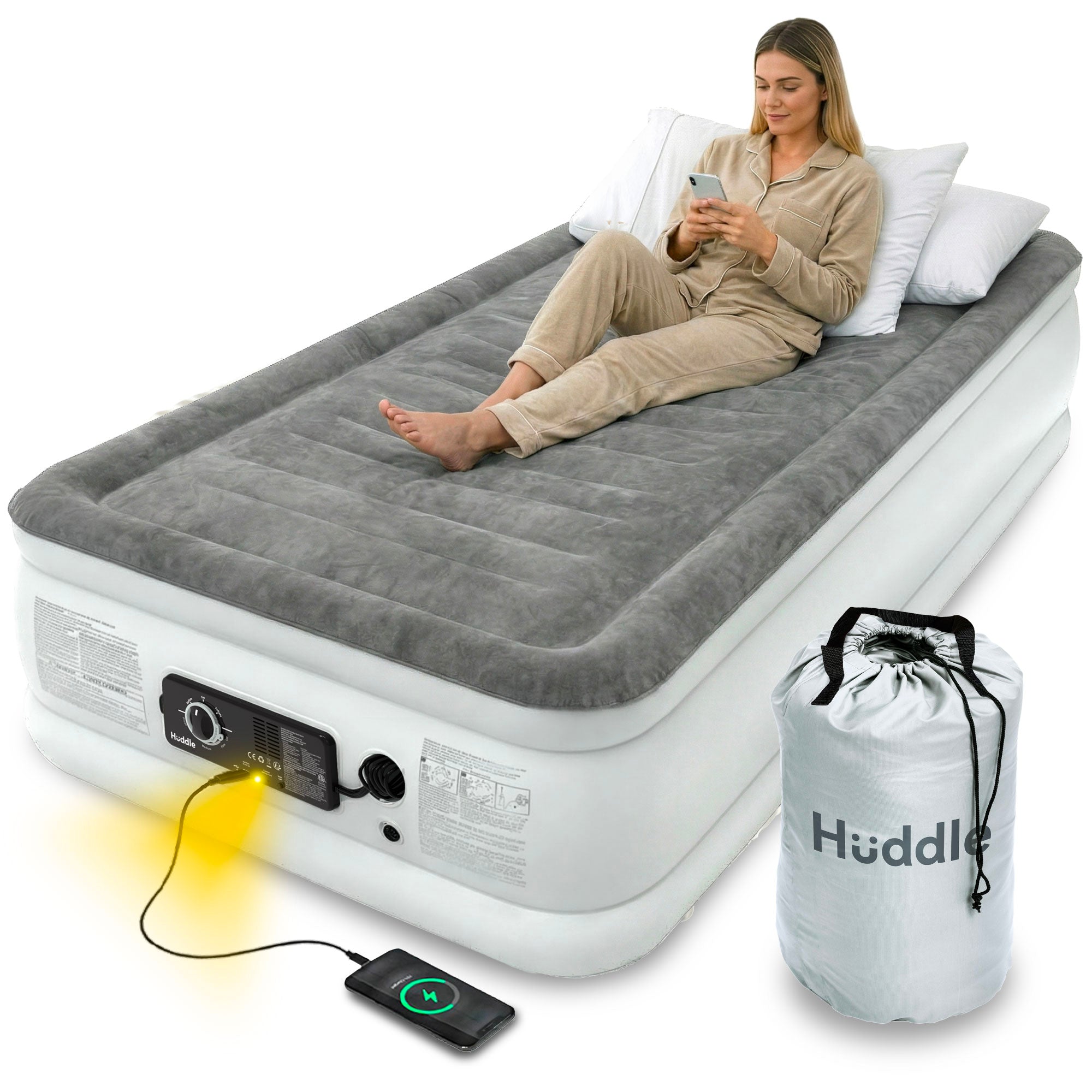
For example, Huddle’s airbed is designed to tackle one of the biggest durability issues head-on: overnight deflation. With its dual pump system, it maintains air pressure while you sleep, reducing stress on seams and helping extend the overall airbed lifespan.

Can You Use an Airbed Every Night?
Yes, but only if it’s designed for it.
Using an airbed nightly places higher demands on durability, comfort, and support. A standard airbed may wear out quickly under daily use, but a premium model with reinforced construction and consistent air support can handle it much better.
If you’re planning long-term use, focusing on airbed lifespan becomes even more important.
Final Thoughts: Getting the Most Out of Your Airbed
So, how long should a good airbed last?
With the right product and proper care, a high-quality airbed can easily last 3 to 5 years or more, even with regular use. The key is understanding what affects durability and taking simple steps to protect your investment.
To maximise your airbed lifespan:
Choose a well-built model
Use it on suitable surfaces
Store it correctly
Maintain proper inflation levels
A little care goes a long way. And when you combine that with modern airbed technology, you can enjoy consistent comfort night after night without the usual frustrations.
Share:
Can You Sleep on an Airbed Every Night? Understanding the Pros and Cons
How to Host Overnight Guests Without a Spare Room at Home