

Airbeds have come a long way. What was once seen as a temporary solution for guests or camping has evolved into something far more practical, comfortable, and reliable. But even with modern designs, one question still comes up time and time again: how do you make an airbed feel like a real mattress?
If you’ve ever woken up on an airbed feeling slightly unsupported or noticed it doesn’t quite match the comfort of your bed at home, you’re not alone. The good news is that with the right setup and a few simple adjustments, you can dramatically improve both comfort and stability.
In this guide, we’ll walk through exactly how to make your airbed feel like a real mattress, from choosing the right foundation to fine-tuning firmness and layering for better sleep.

Why Airbeds Feel Different to Traditional Mattresses
Before improving comfort, it helps to understand what makes airbeds feel different in the first place.
Traditional mattresses use springs, foam, or hybrid constructions that provide consistent structure across the surface. Airbeds, on the other hand, rely on air pressure. This means their feel can change depending on inflation level, temperature, and how weight is distributed.
That doesn’t mean they can’t feel just as good. In fact, with modern designs like Huddle’s airbed, features such as internal air pillars, flocked tops, and continuous air support systems already bring them closer than ever to a real mattress.
The key is knowing how to optimise what you’ve got.
1. Get the Firmness Just Right
The biggest factor in making your airbed feel like a real mattress is firmness.
Too soft and your body sinks too much, creating pressure points. Too firm and it can feel rigid and uncomfortable. The goal is to find a balance where your body is supported but still cushioned.
How to get it right:
Inflate the airbed fully, then release a small amount of air gradually
Lie down in your usual sleeping position and check alignment
Your hips and shoulders should feel supported without dipping
A common mistake is underinflating to make it “softer.” In reality, proper support often comes from a firmer base with soft layers added on top.
If you want to make your airbed feel like a real mattress, start with a solid, supportive foundation.
2. Add a Mattress Topper for Instant Comfort
One of the easiest and most effective ways to improve comfort is by adding a mattress topper.
This single addition can completely transform how your airbed feels, helping it mimic the softness and contouring of a traditional mattress.
Best options:
Memory foam toppers for contouring support
Quilted toppers for a softer, hotel-like feel
Foam pads for added insulation and stability
A topper helps distribute weight more evenly, reducing pressure points and preventing that “floating” feeling some airbeds can have.
If your goal is to make your airbed feel like a real mattress, this is one of the most impactful upgrades you can make.
3. Use High-Quality Bedding
The bedding you use plays a bigger role than most people expect.
Thin or loose sheets can highlight the feel of the airbed underneath, while high-quality bedding adds softness, warmth, and structure.
What to look for:
Deep fitted sheets that stay secure
Higher thread count fabrics for a smoother feel
Layered blankets or duvets for added cushioning
Tightly fitted bedding also reduces movement and helps the surface feel more stable.
4. Place Your Airbed on the Right Surface
Where you place your airbed has a direct impact on how it feels.
A hard, cold floor can make the bed feel less supportive and more prone to shifting. Adding a stable base improves both comfort and insulation.
Ideal setups:
Carpeted floors for better grip
Rugs or foam mats underneath
Raised frames or platforms if available
Even something as simple as placing a thick rug underneath can help make your airbed feel like a real mattress by reducing movement and improving warmth.
5. Keep the Temperature in Check
Airbeds are sensitive to temperature changes. Cold air contracts, which can make the bed feel softer overnight, even if there’s no leak.
This is often mistaken for deflation, but it’s simply physics.
How to manage it:
Inflate the bed in the same environment you’ll sleep in
Avoid placing it near cold drafts or windows
Top up air slightly before bedtime if needed
Modern designs like Huddle’s airbed solve this with built-in systems that maintain pressure throughout the night, helping it feel consistent from evening to morning.

6. Reduce Movement for Better Stability
One of the key differences between an airbed and a traditional mattress is motion transfer.
If the air inside shifts too much, it can create a slight wobble effect. Reducing this movement makes the bed feel more stable and mattress-like.
Tips:
Ensure the bed is fully and evenly inflated
Use non-slip mats underneath
Add weight evenly across the surface
Some airbeds, like Huddle’s, include internal air pillar construction to minimise this movement and create a more structured feel.
7. Layer Like a Real Bed
Think of your airbed setup the same way you would a normal bed.
A traditional mattress isn’t just one layer, it’s a system. You can replicate this by layering your airbed setup.
Example setup:
Airbed (firm base)
Mattress topper
Fitted sheet
Duvet or blanket layers
This layering approach helps build that familiar, cosy feel and is a key step if you want to make your airbed feel like a real mattress.
8. Choose a High-Quality Airbed
Not all airbeds are created equal.
If you’re starting with a basic model, there’s only so much you can improve. Higher-quality airbeds are designed specifically to feel closer to real mattresses from the outset.
Features to look for:
Double-height design for easier access and better support
Internal structure for full-body support
Soft flocked top for comfort
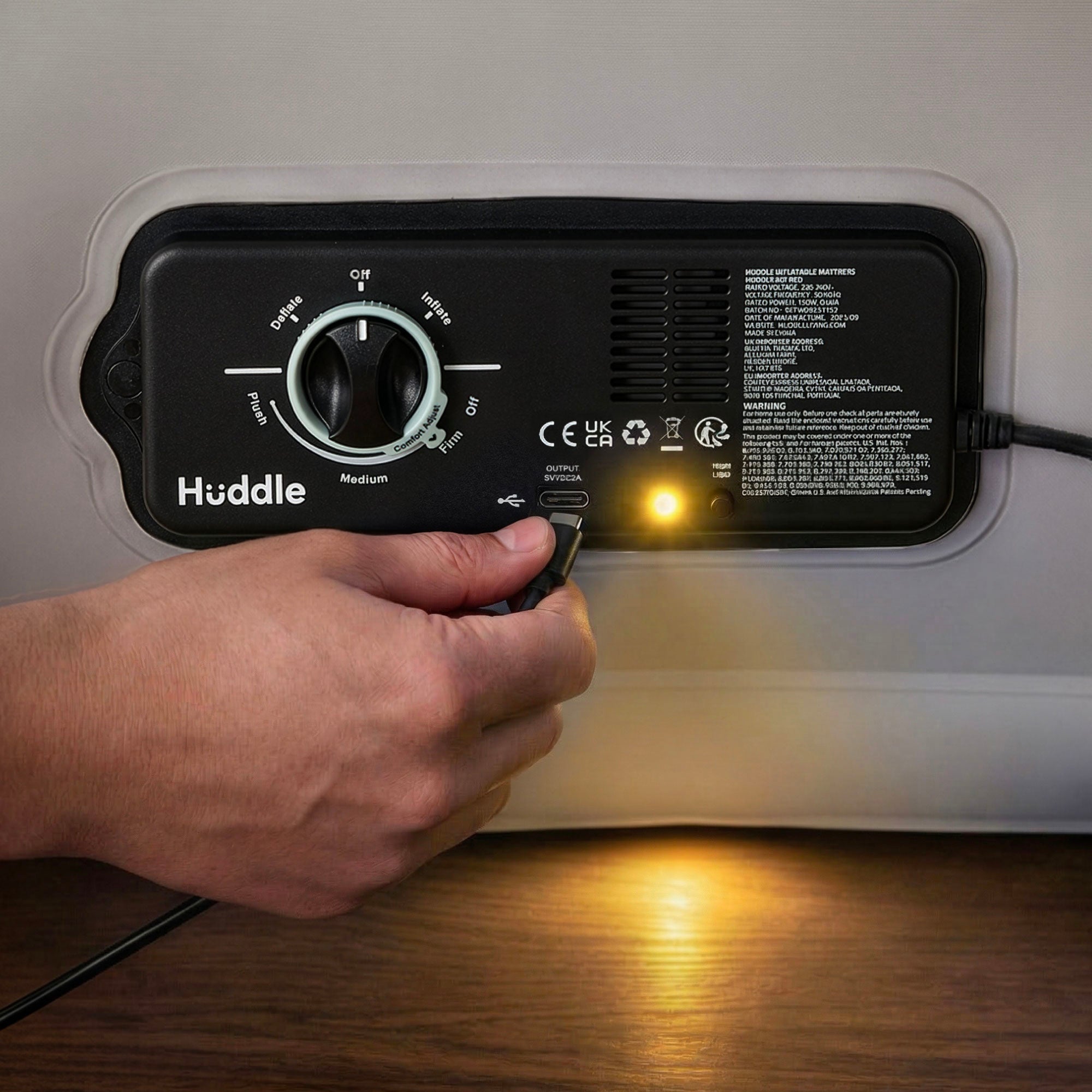
Built-in pump for easy adjustment
Continuous air pressure systems to prevent sagging
Huddle’s airbed, for example, includes a dual-pump system that maintains firmness throughout the night, removing one of the biggest issues people associate with airbeds.
9. Give It Time to Settle
New airbeds can stretch slightly during their first few uses. This is completely normal and can affect how firm the bed feels.
What to do:
Inflate the bed and leave it for a few hours before first use
Top up air after initial expansion
Repeat for the first few uses
Once settled, the bed will hold its shape more consistently, helping it feel closer to a real mattress.
10. Create a Bedroom-Like Environment
Comfort isn’t just about the bed itself. The environment plays a huge role in how well you sleep.
Small changes that make a big difference:
Use proper pillows instead of travel ones
Add soft lighting for a relaxed feel
Keep the room temperature comfortable
Reduce noise and distractions
When everything around your airbed feels like a real bedroom, the experience becomes much closer to sleeping on a traditional mattress.

Final Thoughts
If you’ve ever wondered how to make your airbed feel like a real mattress, the answer isn’t one single change, it’s a combination of small improvements that work together.
Start with proper firmness, add a quality topper, use good bedding, and make sure your setup is stable. From there, small details like temperature control and layering can take things even further.
Modern airbeds, especially those designed with comfort in mind like Huddle’s, already do much of the heavy lifting. With the right setup, you can create a sleep experience that genuinely rivals a traditional mattress.
Whether you’re hosting guests, setting up a spare room, or using an airbed more regularly, these tips will help you get the most out of it.
Because a great night’s sleep shouldn’t depend on what kind of bed you’re on.
Share:
The Ultimate Guide: What to Look for When Buying an Airbed
Can You Sleep on an Airbed Every Night? Understanding the Pros and Cons